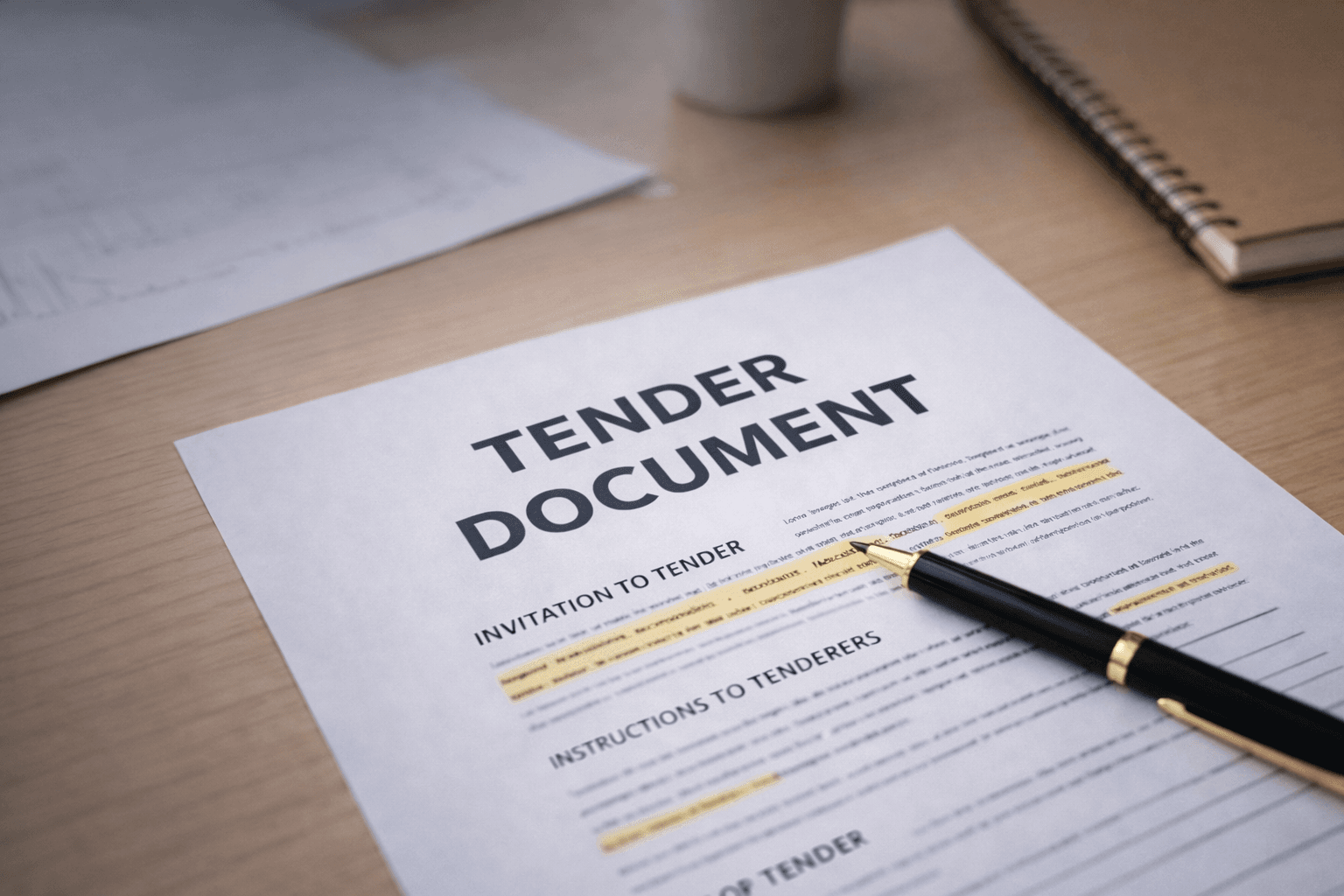
How to Analyze Tender Documents and Identify Important Information
Government tender documents can feel overwhelming — long PDFs filled with clauses, annexures, and technical jargon. Many first-time bidders skim a few pages and give up. Yet, this step — carefully reading and understanding the tender document — often decides whether your bid qualifies or gets rejected.
Why Tender Documents Matter Every clause in a tender document serves a purpose. It outlines what the buyer expects, how you should respond, and under what conditions your bid will be evaluated. Missing even one eligibility requirement or overlooking a technical detail can disqualify an otherwise strong bid.
What Is a Tender Document A tender document is the official set of instructions, conditions, and specifications released by a government department when inviting bids. It acts as both a blueprint and a legal contract.
If your bid doesn’t follow these rules exactly — whether missing a form, misquoting a clause, or uploading documents incorrectly — it may be rejected.
Why Reading Tender Documents Properly Matters Most rejections occur not because bidders lack capability, but because they misread or ignored parts of the document. Proper reading ensures you meet expectations fully and only apply for tenders you qualify for.
Key reasons include:
Prevents Disqualification – Missing a certificate or clause can invalidate your bid.
Saves Time & Resources – Helps identify tenders that match your capacity and registration status.
Strengthens Proposals – Tailoring documents to requirements boosts evaluation scores.
How to Analyze Tender Documents and Identify Important Infor... :: Tender Bharo Solutions | Tendersbharo
Builds Credibility – Consistently compliant bids enhance your reputation.
Step-by-Step: How to Read a Tender Document Tender documents can be lengthy, but the key is to read strategically. Focus on sections that affect eligibility, documentation, and pricing.
Step 1: Start with the Summary Page Note tender number, issuing authority, submission deadline, EMD amount, and tender fee. These set the timeline and financial requirements.
Step 2: Read the Scope of Work Understand product descriptions, service details, and expected outcomes. This ensures accurate quoting and alignment with buyer expectations.
Step 3: Check Eligibility Criteria Review requirements like company registration, turnover, experience, certifications, and licenses. If you don’t meet them, avoid bidding.
Step 4: Study Technical Specifications Match product or service details precisely with buyer requirements. Even small deviations can lead to rejection.
Step 5: Review Submission Instructions Follow file formats, annexure order, document size, and DSC usage exactly. Incorrect submissions are a common cause of rejection.
Step 6: Understand Terms and Conditions Focus on payment clauses, delivery timelines, penalties, warranty obligations, and dispute resolution. These impact cost and planning.
Step 7: Review Evaluation Criteria Learn how bids are scored — weightage for technical compliance, pricing, experience, and certifications. Optimize accordingly.
Step 8: Make a Checklist Create a checklist of required documents, annexures, and declarations. This ensures nothing is missed during submission.
How Tender Bharo Helps Sellers Many businesses struggle with tender documents due to complexity and compliance requirements. Tender Bharo simplifies this process by:
Reviewing tender documents thoroughly
Highlighting key eligibility and compliance points
Creating structured checklists for submission
Optimizing technical and financial proposals
Automating document preparation to reduce errors
With Tender Bharo’s support, sellers can confidently navigate tender documents, avoid mistakes, and improve their chances of winning bids.
How Tender Bharo Makes Tender Reading Easier Going through tender documents manually can be exhausting, especially when handling multiple bids at once. Tender Bharo brings speed and precision to this process, turning a time-consuming task into a streamlined workflow.
Automated Tender Review Instead of spending hours scanning lengthy PDFs, Tender Bharo applies a structured method to extract essential information such as submission deadlines, eligibility rules, EMD requirements, and key contractual terms.
Concise Tender Summaries After analyzing the document, Tender Bharo generates a clear summary sheet that highlights the most important points — requirements, risks, and opportunities — so sellers don’t get lost in unnecessary details.
Compliance Gap Alerts The system compares your business profile against tender requirements and flags missing certificates or documents. This proactive check helps prevent rejection due to incomplete compliance.
Organized Document Preparation Tender Bharo provides a ready checklist of all annexures, attachments, and declarations needed. This ensures your submission is complete, properly structured, and fully aligned with GeM standards.
Focused Decision-Making By filtering tenders that truly match your eligibility and pointing out qualification gaps, Tender Bharo helps you concentrate resources on bids you have a realistic chance of winning.
FAQs: Reading Tender Documents
Why should I read a tender document carefully? To fully grasp buyer requirements, eligibility rules, and submission steps — ensuring your bid is accurate, compliant, and competitive.
How can I quickly identify key information? Focus on the summary page, eligibility section, scope of work, submission guidelines, and evaluation criteria.
What happens if I miss an eligibility requirement? Your bid may be rejected during technical evaluation. Always confirm your business meets all listed conditions.
Do tender documents follow a standard format? Most government tenders share similar structures, but annexure order and language can vary. Always read each one carefully.
Which sections are most critical? Eligibility criteria, scope of work, and submission instructions — these determine qualification and compliance.
Can tender documents be updated after release? Yes. Corrigenda or addendums may be issued. Always check for updates before submitting.
How can I extract details faster? Use digital solutions like Tender Bharo, which automatically pulls out deadlines, EMD details, and compliance requirements.
What if the document has unclear information? Contact the tender officer or submit a clarification request before the pre-bid deadline.
Can small businesses manage complex tenders? Yes, especially with support from Tender Bharo, which simplifies requirements into actionable steps.
How does Tender Bharo assist with tender understanding? It automates document review, extracts key details, highlights compliance gaps, and provides summarized briefs — allowing you to focus on strategy rather than paperwork.
Mastering tender reading is one of the most powerful skills in government bidding. A well-understood tender allows you to spot opportunities, avoid mistakes, and prepare bids with confidence. Knowing buyer expectations, required documents, and evaluation methods gives you control over the process and helps you make smarter decisions. Since tender documents can be lengthy and complex, many businesses rely on Tender Bharo. It simplifies analysis, extracts critical details, highlights compliance issues, and produces actionable summaries. With Tender Bharo, you don’t just read tenders — you interpret them strategically, respond effectively, and compete with greater confidence.
For further information or assistance in exploring these opportunities, please feel free to Contact Us.